


 Guide
Guide BoxPrint Guides
A practical guide to choosing product packaging in Oman
Good packaging does not begin with the shape of a box. It begins with the complete product journey: how the product is displayed, stored and delivered. Once that picture is clear, structure, material and finish become informed decisions rather than decoration.
Start with the product, not the box
Record the product's final dimensions, approximate weight and method of use. Note whether it needs an insert or additional support. A fragile item has different needs from a lightweight one, and retail packaging has a different role from packaging made for delivery.
- Measure the finished product rather than only an early sample.
- Identify the parts that need support or protection inside the pack.
- Explain how the product will be displayed, stored and delivered.
Choose the structure around the opening experience
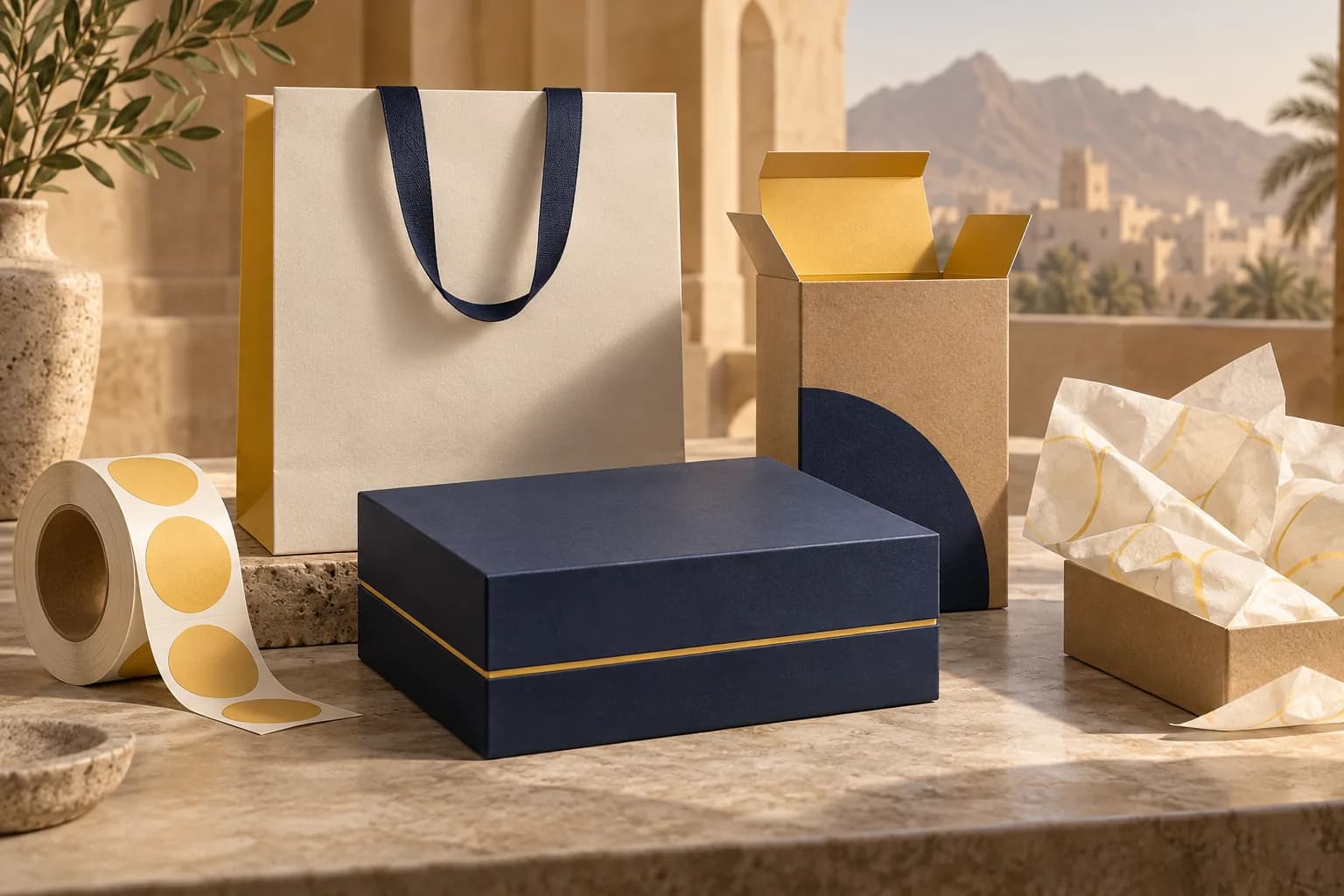
A folding carton can be efficient to store and assemble, while a rigid box creates a stronger presentation for gifts and premium products. The right structure balances protection, assembly and the customer's experience when opening it.
A practical rule: let the packaging solve a real product need before adding a decorative finish.Use material and finish to support the identity
Material determines the pack's feel, strength and print response. Finishing comes next: matte lamination creates a restrained surface, gloss adds colour energy, and foil or embossing can direct attention to a specific element.
For projects in Oman, it also helps to explain the expected storage and delivery conditions to the production team, especially when a product moves between a warehouse, vehicle and retail point. That context supports a more useful discussion about material and structure.
A short brief before requesting a quotation
- Product type, dimensions and approximate weight.
- Required quantity and method of display or delivery.
- Logo, colour and required copy files when available.
- Visual references that explain the direction without asking for a copy.
- The finishes you want to compare in the quotation.
A clearer brief makes it easier to propose an appropriate pack and agree its details before proofing and production.
Related topics:
Browse guides

Questions this guide answers
Editorial examples of what this guide covers — not comments left by users.

Where do I start when choosing packaging?
With the product itself: its dimensions, weight and how it is displayed, stored and delivered. Structure, material and finish follow from that.

Is a rigid box always better than a folding carton?
No. A folding carton is efficient to store and assemble, while a rigid box gives gifts and premium products a stronger presence; the right choice balances protection, assembly and the opening experience.

What should I prepare before requesting a quotation?
The product type, dimensions and approximate weight, the quantity and how it will be displayed or delivered, logo and colour files, visual references for the direction, and the finishes you want to compare.